Pages

Tuesday, 12 April 2011

One Month Today

Dear Friends,
Well, the earthquake celebrated its anniversary in style. I was awoken this morning with a force 3, a gentle rumble. Just before 2 pm there was a sharp jolt and then at 5.20 pm came the big one. This was a full scale, long-lasting shake You don't stop to think. We all headed for the exit. Out into the yard in the rain, the radioactive rain we've all been trying to avoid. We stood out there for about five minutes before venturing back inside. Half an hour later we all ran out again. Not such a big one, but you get nervous. There have been repeated shocks and the building continues to sway.

At the reactor the aftershock cut off power to Units 1 to 3 and they had to use fire engine pumps but the electricity was reconnected after 50 minutes. A TV programme at the weekend told us that at Three Mile Island cold shutdown (100'C) was reached after 5 days and the evacuation order lifted after 10 days. Fukushima Daiichi will take from several months to a year to reach this stage, we were told. Then it would take 3 - 4 years to clean up, 10 years to close and 50 years for it to die.

On the face of it things appear to be improving. Radiation levels are falling all the time. At the Koriyama city office it's 1.88 (microsieverts/hour) and at Big Palette conference centre 15 minutes drive from here only 0.98. Hey that's the same as Cornwall! And there's no trace of radioactive material in our water.

So why has Chief Cabinet Secretary Edano announced today that people in Iidatemura are to be evacuated? I guess the people in Tokyo are worried about long term effects. Iidatemura had a high of 50 mcsv/hr on 15 March but now it's down to 5. Fukushima city had 5 for a while but they weren't evacuated. It seems like the wrong decision at the wrong time.

Meanwhile the Americans announced the basis for their 80 km evacuation advisory given on 16 March. They admit now it was based on incomplete data on a hypothesis of fuel at No 2 reactor being completely destroyed and radioactive material dispersed for 16 hours. It turns out the Japanese government order of 20 km evacuation and 20 - 30 km shelter was appropriate in the circumstances. These are difficult decisions to make I know but I wish they were more holistic. Evacuating can be more traumatic and unhealthy than mild doses of radiation. At least this time Edano has said that the evacuees will be taken care of financially. The 'voluntary evacuation' recommendation was insiduous.

Here's a clip a friend sent me of Japanese journalists venturing into the no-go zone. Packs of dogs and herds of cattle. Interesting.

The Koriyama schools went back today. But just for the morning. The central kitchens have been damaged and can't yet supply lunches.

And let's finish on an upbeat note since it's the anniversary. The word for recovery is 'fukkyuh' (復旧)which means getting things back to where they were, restoration. There's another word 'fukkoh' (復興) which is much stronger and means renewal, building a new future. Edano has announced the formation of a group to consider renewal, first meeting this week. It'll be attended by the governor of Miyagi who has already come up with a plan: a 10 year plan, the first three years of which will be 'fukkyuh' ie getting things back to normal.
The poor governor of Fukushima looks more and more tired and on every occasion asks for only one thing: an end to the affair (jitai no shuhsoku 事態の収束)。He can't make any plans until the reactor's sorted.
Goodbye from an unseasonally cold Koriyama.
Anne

Sunday, 10 April 2011

R & R

Hi folks!
Feeling much better after my weekend away from the office, newspapers and TV. I took a little trip to visit my good friends in Kitakata, near Aizu Wakamatsu in the west of the prefecture. So today here are my holiday pics. It was a sunny day and Fukushima is very beautiful.

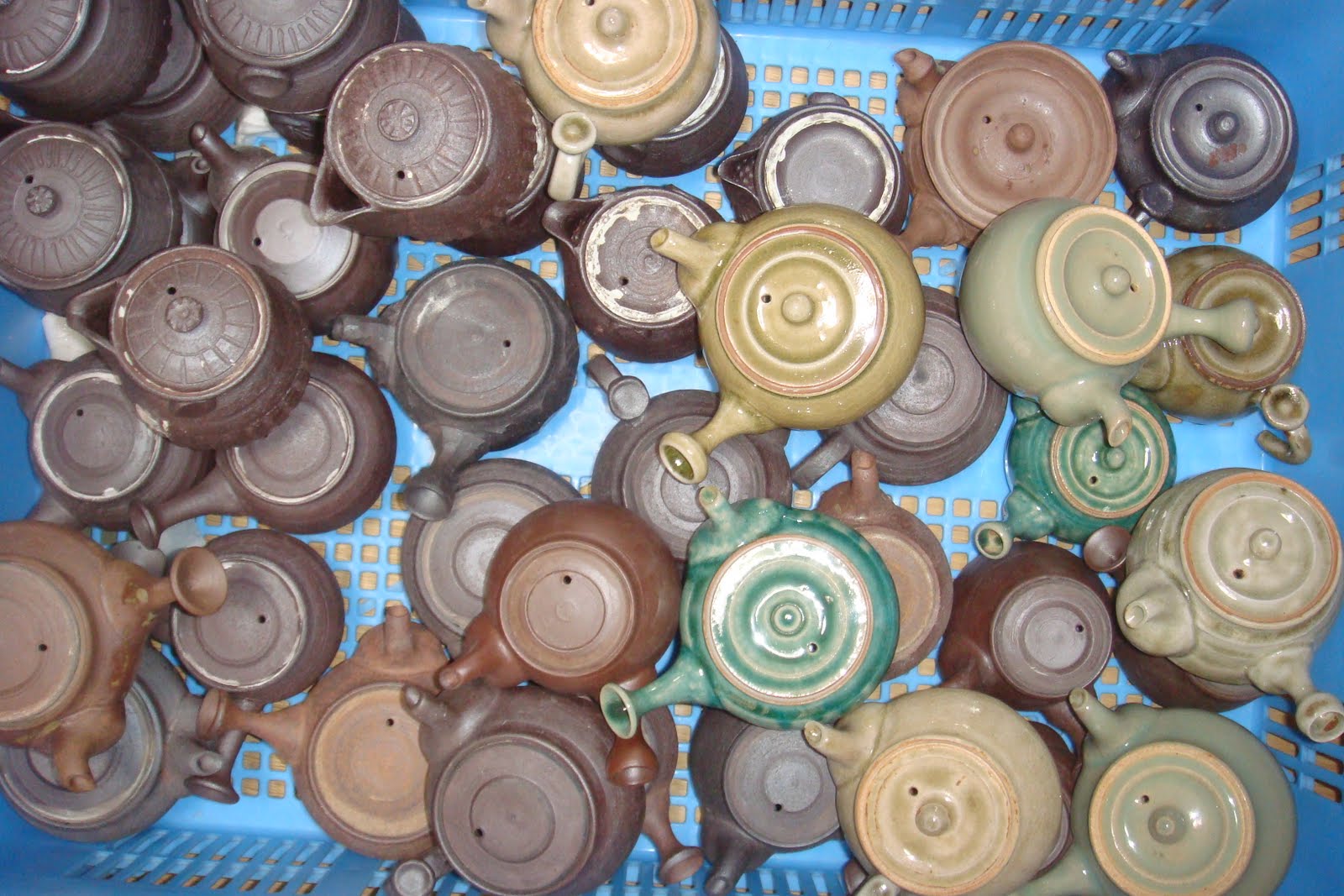
I headed for the lake, Inawashiro, the second largest lake in Japan, deep and clear. Lots of snow still on Mt Bandai. Then drove round to the back of the mountain, Ura Bandai, to one of my favourite spots, Goshiki-numa, or the Five Coloured Pools - different colours of blue and green - created when the volcano erupted 130 years ago. Spectacular and very beautiful. But I couldn't go beyond the first lake as the hiking path was still deep in snow. Then on  to Kitakata and at my request a visit to another magical place. Nagatoko is a hall, open on all sides, where shrine maidens used to dance to the gods. It dates from the Heian period (1051). It's famous in the autumn when the leaves of a very old gingko tree turn bright yellow and carpet the ground. Next an onsen. You can't be in Fukushima and not sample the hot springs. This was a municipal facility, part hot-spring, part daycare centre, in a beautiful new building, cost 300 yen! Then on to a local potter, Teshirogi-san of Kangetsu-gama (閑月窯)to choose a teapot or two to replace those smashed in the earthquake.

At Ura Bandai we met some evacuees from Tomioka, within the 20 km evacuation area and right next to Fukushima No 2 Nuclear Power Station (which was not affected by the tsunami). They were on a day out from Koriyama: 1,700 people and the town hall have moved to the Big Palette conference centre (where I was when the quake struck). Then at the hot spring we met some people who had been evacuated to Kitakata. The little boy wanted to speak English but was too shy. I don't know how many evacuees there are. It was on the news just now that there are 23,000 people from Fukushima prefecture who have evacuated to other parts of the country, so there must be tens of thousands remaining here.

Separately, both Sadao and Mary Helen commented that the normally taciturn people of Aizu were talking to each other more! Saying hello to strangers, asking neighbours how they had fared in the quake. There seems to be a new feeling of unity here.

Over our tempura soba at lunchtime we were trying to think of good uses for the area round the reactor, once it's cooled down and closed down. I've already mentioned someone's idea to turn it into a giant electricity generating plant which would supply us this time with electricity for the new industries which will have to be created to replace agriculture and fishing. Or there's this one: turn the whole coast into a giant military base - give the Okinawans back their beaches. But this one from Sadao must be the best: fill the area with temporary housing (kasetsu jutaku, the ones they're putting up for the evacuees) and make it into a retirement village for all the politicians who got us into this mess.
And with that I will leave you!
More tomorrow by which time I should be back in reporting mode.
Love
Anne
Fields on the outskirts of Koriyama

Lake Inawashiro and Mt Bandai


Ura Bandai


The blue water in the first of the 'Five Coloured Ponds'


Nagatoko in Kumano Shrine, hall for ceremonial dances  (1051)


Inside


The shrine itself


Choosing teapots


Saturday, 9 April 2011

The Aftershock

Dear Friends
Sorry about the abrupt end to the post last night. I was sitting here in my apartment on the 7th floor trying to think of an upbeat way to end the message when the quake hit. It was a big one - strong force 5 here in Koriyama. I dived under the table and crouched there hanging onto the wall. It went on for about a minute, strong waves from side to side and up and down. I want to tell you what it was like but it's so hard to put into words. It's noisy: the building creaks and rattles. I really can't find the words to describe it. All I know is it is absolutely terrifying.

The tremors subside. I come out from under the table feeling a bit silly but then go straight into emergency mode: TV on, cycle helmet on, check front door (yes, it opens), switch off main gas tap, fill the bath and every available container with water (don't want to get caught out like last time), sign off the blog. And then I just sat, watching the TV in my cycle helmet. The lowest point was when they reported that three out of four of the electric pumps at Onnagawa nuclear power station in Miyagi (in  the heart of the tsunami disaster area) had stopped. I couldn't bear to think of the Fukushima nightmare spreading. But then the pumps were reconnected. After a couple of hours I went to bed (in my clothes) and slept soundly.

At the office next morning the cracks on the stairs are a bit wider but that's all. The factory is alright. Now I will own up to something. Our new practice of sending the factory staff home early was not entirely altruistic. There were problems with the oldest part of the factory and work was done this last Monday and Tuesday to add extra braces and supports to strengthen the structure. I am so grateful to the CEO of that company who came round one Sunday after the quake and got the work done before yesterday's big shock.

The sales forecasts for the year are in. Sales to just 8 customers should see an increase over last year but there's a pageful of customers whose sales will fall. Some factories are moving production overseas but the vast majority of cases are related to this disaster: four factories closed down, dealers who have lost their customers, factories damaged, production reduced. It makes dismal reading.  And then there are those marked 'depends on the outcome at the power station'.

We make corrugated cardboard boxes and about 15% of our sales go to the agricultural sector so we're following the radiation and soil contamination question closely. As I reported yesterday seven localities, including Koriyama, had high levels of caesium in the soil (2-3,000 bequerels per kilogram). Tests in these areas are to be repeated and they are to decide next Tuesday whether planting can go ahead. Farmers have been given the go ahead to start work in other areas. Nobody has any proper information - there are no Japanese standards or even international standards I was told, although the Japanese government seems to use the figure 5,000 bequerels as the upper limit. The attitude of the farmers and the big farming cooperative seems to be that they will plant the rice anyway and if they're not able to sell it they'll make sure they get compensation (the Prime Minister has pledged to compensate all affected).

The ban on spinach from Gunma and milk from Aizu, Kitakata and Inawasahiro in the west of the prefecture has been lifted. Levels of radiation in the Aizu area have never been raised and the ban was a knee jerk reaction implemented at the prefecture (administrative) level. But as one farmer said, 'once you've lost your reputation it's not easy to get it back'. The damage is done. These are sentiments all of us in Fukushima share. Do the people in Tokyo making these decisions realise the impact they are having? They don't seem to have our interests at heart. For example, I heard today that when they measure the spinach they take a plant from the field, roots and soil and all. Why don't they cut off the roots and wash it? That's how people will eat it.

The results of the survey of radiation levels at schools came out and the levels were in line with those taken at the city office several times a day which are shown on television. So I guess the schools will be going back as planned on Monday.

We have had many more aftershocks today (one just now) and I've got earthquake sickness again: the feeling that things are swaying even when they're not. To be frank, this last aftershock has got to me and suddenly I feel very tired. I'm going to take a day off tomorrow, the first since March 11, and try and get out into the countryside (west of course) so there will be no blog tomorrow. Please excuse.
Keep well
Anne

Thursday, 7 April 2011

When will this end?

Hi
We had a visit today from the guy I told you about before, who makes printing dyes for us in his factory north of Sendai. We hadn't heard anything more about his request for corrugated sheet to use as partitions in the evacuation centres and I presumed that the need was over, that we had been too late. But it seems that is far from the truth. He says conditions up there are dreadful. There are still places not connected by road and receiving helicopter drops. He was afraid any sheet we sent would be burned since there is still no oil for heating and people are cold! He's waiting till people get more organised, into small groups, and then he's going to measure up and ask us to make the sheets.

He's over 60 and only last year had a bout with cancer and he's lost his own mother in the tsunami but he's volunteering at weekends. He says he's still doing a lot of work with the foreign media, as a spokesman or finding people to be interviewed. I said that everyone abroad was full of admiration for the way the Japanese people are coping but he said the reality is very different. He said the people are getting energy from the many foreign volunteers. He also mentioned a mountaineering group who had got members together from all over the country on Twitter and had come to help.

I relate these facts as he said them. It was a brief conversation but a real outpouring from the heart. Over and over he said, 'Hisan desu' (悲惨です), it's terrible. 'Hisan' translates as wretched, miserable, pitiable, tragic. You get the picture.

The long-awaited results of the soil survey were in the papers this morning but the results are confusing and worrying. The measure is of bequerels of caesium (134 and 137) per kilogram of soil. Normal conditions are in the tens. Only Nishi-Aizu, in the far west, had a reading at that level (42). Everywhere else was over 100. Iidate, north of the reactor where the contaminated milk was found had a whopping 15,031. Hirata where the brown rice I have been living on these past few weeks was grown had a reading of 238 (paddy) and 403 (dry fields). Koriyama had a reading of 875 near Sakuragaoka in my old house where I was staying until last week but in town it's 2,500 and near our shiitake packing factory to the north 3,600. There seems to be no rhyme nor reason to these figures. Places near the reactor are low(ish) while Koriyama, Nihonmatsu, Fukushima, big towns 60 km away have high readings.The tests are to repeated in these places and farmers have been asked to delay starting work.

As for the other places, this request has not been made so farmers are in theory able to start tilling the fields. But there are no national standards as yet so everything is vague and unsatisfactory. These are not the results everyone was hoping for and will only fuel the damage to Fukushima food and products.

Shocking bit on the news about a delivery company which had been asked not to make deliveries in Tokyo in its trucks with Iwaki numberplates. I've heard similar stories myself and you get the odd comment. Feel like I'm in a biblical leper colony!

Just this moment we have had a massive earthquake. There is a tsunami warning out.
I'm sorry. I can't write anymore.
Anne

Nothing to Worry About

Dear Friends
Just as I sat down to write this blog we had a minor quake. Unsettling as we haven't had any noticeable ones since Sunday. Subtitles on the TV told us it was force 4 in Miyagi, force 3 here. They didn't stop the programmes so nothing to worry about. Incidentally listening to the radio yesterday I heard that earthquake-sickness is a recognised complaint, some trouble with the ears, and travel sick pills are effective!

The sales results are in for March -  20% down on last March. Presuming that the first 10 days were the same as last year, it means that sales since 11 March were 65% of the same period last year. We face a big cash shortage at the end of the month. We have money in the bank - for now ...  We are trying to get the years forecasts  together. Our man in Iwaki has put zero forecasts in for many of his customers for the whole year. Surely things can't be that bad? But everytime the sales force come back the forecasts seem to be revised downwards. The Mitsubishi factory is supposed to re-open next Monday but we're not sure. The big companies evacuated their staff early on and are really nervous about the nuclear question.

The results of the big soil survey were due tonight but there's been nothing on TV so they haven't been announced yet. I'm glad. This informaton needs to be properly controlled. We've had too many damaging announcements. It's one thing to try and be open but vague statements (such as recommending voluntary evacuation) or Edano's blanket ban on consuming veg from the whole prefecture have been extremely damaging. One word you hear a lot is 初動 (shodoh) which means the first shock of an earthquake but it seems to be used in the sense of 'knee jerk reaction' to events. Thank you for the comments on yesterday's post. I take on board the fact that nuclear is safe and hardly anyone has died as a direct effect of radiation (the two workers who died were killed by the tsunami) but the real damage is from contamination, doubt about the safety of food, can I even say prejudice, and the huge economic damage we are suffering as a result.

Here's a link to a piece on the BBC website entitled 'Japan Plant - who's in charge?' which voices the opinions of a lot of people here. There's a strong feeling that Prime Minister Kan's anti-bureaucrat mission is misplaced (whatever sins they have committed in the past) and that to get organised we need to get the bureaucrats back in.
One person who has come out of this well is Ishihara, the governor of Tokyo. He's up for election next Sunday. He's been very practical, lending civil servants, crematoria and state of the art fire engines to the disaster areas and has been more statesmanlike than the Prime Minister.

The question I asked in yesterday's blog: what is worst scenario? was answered on TV this morning. Release of radiation, which we all know about, and another hydrogen explosion. The leak from the pit into the sea has been plugged and now they are pumping another chemical into one of the reactors to prevent such an explosion. But since Sarkovy's visit the government top brass have ditched their unfashonable boiler suits and are wearing suits so things must be alright. Nothing to worry about.
Love to you all
Anne


Tuesday, 5 April 2011

Iodine Pills

Hi folks
I got a phone call today from the British Embassy reminding me that they are recommending British nationals within an 80 km radius of the reactor to leave (Koriyama is 56 km away). I asked why when the Japanese government recommends shelter up to a radius of only 30 km and was referred to their website which merely states that it is a precautionary measure and in line with US recommendations. If only life was so simple! I run a business with 100 staff and after a bit of bother last year with a dishonest employee, I am the sole guardian of the company seals: without me, no cheques would be stamped, no official documents would be authorised. Unfortunately, I can't jump ship.

But the embassy are going to send me some iodine pills. I've been looking at the instructions. You only get enough for two doses and a dose only lasts 24 hours so you haven't to waste them. You have to wait until the 'black plume' of radiation gets near.  I'm old enough to remember the Cold War and the instructions we were given in case of a nuclear bomb. You were supposed to turn the understairs cupboard into a shelter, line it with tin-foil and stay there for two weeks. How a family was supposed to breathe for two weeks in such a small place I don't know. A while back such reminiscences would have been comical. No laughing matter now. But I thought this was not supposed to be a Chernobyl style meltdown, that worst case scenario would be a gradual contamination of the soil (which is certainly happening). If someone can enlighten me I would be very grateful. In the meantime, I'll hang onto the pills.

The news from the reactor goes from bad to worse. The water they dumped last night is drifting south along the coast and not dispersing as expected. The Koreans are angry that it was dumped at night and without warning.The fisherman are devastated. The TV shows diagrams of the food chain which for once are not at all reassuring. The plankton, seaweed and little fish near the shore are going to be contaminated and then they're going to be eaten by bigger fish which in several months time could show levels of caesium 100 times normal  (caesium is the bad one that takes 30 years to disintegrate).

Proofs of my new book, Conversational Japanese:  the right word at the right time  have just arrived and Tuttle, the publishers, want to go to press on April 18th. Yikes! Since I am by training a linguist, I thought I'd finish today, for those of you who are interested, with some of the current words and phrases being used in this crisis.
Love to you all
Anne

First, the earthquake:
(Note: I don't know how to do macrons on this blog so long vowels are marked either with an extra vowel or with an 'h')

東日本大震災   Higashi Nihon Daishinsai     The Great East Japan Earthquake (the name changed three       times. This is the final official version)
地震         jishin               earthquake
津波         tsunami              (no translation needed)
震災         shinsai                earthquake disaster (this is used a lot, for example:    震災から初めて買物へ行った shinsai kara hajimete kaimono e itta  I went shopping for the first time since the quake)
余震         yoshin               aftershock(s)
断水         dansui               no water supply
停電         teiden               power cut
避難所        hinanjo             evacuation centre
被災地        hisaichi             area affected by the disaster
救援物資        kyuuen busshi         relief supplies
日赤           Nisseki             The Japanese Red Cross (contraction of Nihon Seki Juuji) 
仮設住宅       kasetsu juutaku         temporary housing
運行、運休       unkoh, unkyuu         These are the words used to tell you if the trains are running. Unkoh means they are running. Unkyuu means the service is suspended.

Next, the nuclear disaster:
原発         genpatsu              nuclear power station (contraction of 原子力発電所 genshiroku hatsudensho)
福島原発事故    Fukushima genpatsu jiko      accident at the Fukushima nuclear power station
東電        Tohden                                     Tokyo Electric (abbreviation of Tokyo Denryoku, usually appears in English press as Tepco)
原子炉       genshiro               reactor
冷却水       reikyakusui              water for cooling
放射能        hohshanoh             radiation
避難地域     hinan chiiki              evacuation area
屋内退避地域   okunai taihi chiiki           area where you should remain indoors, shelter
土壌汚染     dojoh ohsen             contamination of the soil

And finally, a really nice word:
心のケア   kokoro no kea    literally, 'care of the heart', it's an all purpose word with a very wide application ranging from holding a child's hand, to listening to someone's problems, to professional counselling.

Monday, 4 April 2011

Toxic waste

Dear All
Back in my apartment and back to the old routine of a 25 minute walk to and from work. In the early morning and under cover of darkness Toshiaki and I don the 'uniform' (hood, mask and gloves) although it's impossible to keep that up during the day. One stays inside, going out quickly in the car when needed. Don't want to worry the staff. Toshiaki has bought a black North Face windbreaker to replace the red poncho.

Schools are due to go back next Monday (11th) but the prefecture is carrying out radiaton tests at 1,400 locations and it will decide whether to go ahead with the school opening ceremonies on the basis of the results. There's also a big soil contamination survey taking place. I think the prefecture has organised this but I'm not sure. Soil tests are being taken at 10 km intervals on a grid pattern over the whole prefecture. The results will be announced on Wednesday (6th). Our sales manager visited the agricultural cooperative in Aizu today. Aizu is a famous historical castle town, very conservative, known as the last stand of the shogunate in the 1860s. It's 42 km west of Koriyama, so nearly 100 kms from the reactor, and separated from Koriyama by a huge lake and high mountains. No traces of radiation so far. They are understandably very angry at being tarred with the same brush as the rest of the prefecture and they talk of  re-registering their produce as 'Aizu' and ditching the Fukushima name. But they are going to wait for the results of the survey on Wednesday.

At the company sales are down. One small agricultural cooperative halved its usual order of 20,000 cases for delivery on 28 April and has warned it may change again. The famous kamaboko (fish sausage) maker we pack for (Yuzuki) on the coast can't resume production until the water gets connected mid-April, the big Sony battery factory in town re-started at the end of last week but won't be back to normal until the end of the month. On the other hand, we have some orders from dealers who can't get their usual supplies from box makers in the Sendai area. We're trying to make forecasts but there's still so much uncertainty.

The news tonight from the reactor is shocking. Since they have run out of places to put the contaminated water they've been hosing in, they're to dump 10,000 tons of 'low radiation' water in the sea tonight from Unit 2 and 1,500 tons from Units 5 and 6. Although this water has levels 100 times normal we are assured that even if we ate fish for a year from these waters we would not be at risk. Who are they kidding! Who is going to be able to fish in these waters? At least the guy who announced this, from Tokyo Electric, was really cut up when he made the announcement, not like the smarmy spokesman from the Nuclear and Industrial Safety Agency who's usually on the news. But coming now, just as people are beginning to think about rebuilding their lives and livelihoods, this is a heavy blow indeed.

Here's a link sent to Takeshi with a really good presentation on what happened at the Fukushima Nuclear Reactors. It's in powerpoint but if you scroll down the comments there's a link to a google.doc you can access if you don't have powerpoint:
http://energyfromthorium.com/2011/03/30/areva-fd-presentation/

So, goodnight from Fukushima. There's a frost warning tonight.
Anne

Back Home

Dear Friends
I moved back to my apartment today. It's still got big cracks in the wall on the north side (see photo Day Four) but the door closes properly now and there's not much damage once you get inside. Senzaki-san and his wife who gave me lodgings for the past three weeks, organised a little dinner last night with champagne. I dressed up a bit and it was wonderful to feel civilised again.

Driving into town from Sakuragaoka the fields were empty. Most farmers around here are part-time farmers so normally a Sunday in spring would see lots of people out in the fields. But I saw no one. Eerie.

Filled up with petrol, no trouble. Gone up to 155 yen/litre from 135 yen. But that's Libya.

At the reactor, they've plugged the crack with plastic but worryingly the radiation levels in the sea have not fallen. Chief Cabinet Secretary Edano has announced that the evacuation areas are to be reviewed. Up to now they've been rather crude: a 20 km exclusion zone shown as a red circle; and outside that a 10 km zone (30 km from the reactor) shown in orange, where people are supposed to stay indoors. Some maps which have been circulating for about a week now show radiation levels to be high in a crescent-shaped area which covers Iidate-mura 40 km north-west of the reactor where the contaminated milk was found. These maps were based on computer simulations drawn up after the explosions on the 14th and 15th and warned of radiation being detected as far away as Shizuoka but they were not made public as 'equipment had been damaged in the earthquake and the figures were incomplete'. On the other hand, we now hear that the test for beef last week was mistaken and Fukushima beef is not affected. But it's too late now. The damage has been done. Sometimes the government seems over-zealous in giving out information and at other times seems to be holding it back. It doesn't inspire confidence. But the gist of it is that it's going to take months not weeks to control the reactor - by which I mean stop the radiation - and that new reality is beginning to sink in.

In the disaster areas things seem more organised. For the past three days a massive search has been mounted to try and recover bodies. 25,000 American and Japanese soldiers, 120 aircraft, 60 ships, are searching the coast. What a horrible job. Of the 16,000 reported missing they only found 66 in the first two days.

Officials are also going round assessing the damage to buildings and issuing certificates (four levels of damage) which will form the basis for compensation.

One hears a lot too of restoration and renewal. The Prime Minister has promised the first meeting of a 'Renewal Committee' on April 11th, a month after the quake. He's promised to rebuild towns on higher ground, make them models of ecology and aimed at an ageing population.

As for the area around the reactor, people are saying that the 20 km zone at least will be nationalised. Maybe they'll turn it into a giant power station and let us have some of the electricity this time to power the new industries that will have to be developed here to replace agriculture and fishing. Koriyama could actually benefit.

I'd run out of foundation and replensihing stocks was an important task today but with the shopping mall still closed (I hear there was a fire, which activated the sprinklers and wet all the stock) and the Ati building (old Seibu department store) at the station also closed, I was forced to shop in the pile 'em high sell 'em cheap drugstore near the station. Treacly Japanese female volcalist's rendition of Holst's Jupiter already making me feel emotional when the place began to shake and rattle. A few things fell off the shelves. We all held our breath. But it didn't last long. I grabbed some cheap teenage make-up, paid at the till and left. A typical day in Koriyama.
Love to you all
Anne

Saturday, 2 April 2011

Ganbare Fukushima!

Hi folks
They've found a crack in a 'pit' in Unit 2 which is leaking highly radioactive water into the sea. The good news is that if they can plug the gap, contamination of the sea will be stopped. The bad news is that there may be more cracks they havn't found yet. Things are progressing: they're moving the radioactive water around to make space for more water; two ships, one a US ship, have arrived with supplies of freshwater to use for cooling the reactors; pumps are ready in  Units 1 to 4 - just need  connecting to the electricity supply; and 8 monitoring posts have resumed taking readings and collecting data, the first time since they were put out of action by the quake. In addition, plastic resin has been sprayed over the site in an attempt to contain radiation from the debris.

We are continually told that levels are safe and there is no risk of cancer but it turns out that this situation is unprecedented and nobody knows the effects of long term exposure to these levels of radiation. Great. We're guinea pigs.

Chief Cabinet Secretary Edano said yesterdy that stabilising the reactor could take weeks or months, and that it would be ten years before it was finally shut down.

Fukushima is fighting back with a 'Ganbare Fukushima!'(Go for it, Fukushima!) campaign. Nishida Toshiyuki, a famous character actor from Koriyama, munched cucumbers with the governor in a local supermarket in an attempt to dispel the scare-mongering regarding all fruit and veg from Fukushima.

But things are not looking good. Rice farmers have been told not to cultivate the fields and await further instructions but things are tense as the rice is generally planted in Golden Week (first week of May) and it takes a month to raise the seedlings. On a lesser note, I'm wondering what to do about the flower bed at the company which is my domain. The ornamental cabbages planted last November should be pulled up and the bed planted with pansies but is it safe to till the soil? I won't bother this weekend. Next weekend?

Supply of  shiitake mushrooms has fallen 60% since the quake. The women packers have been put on a 3 day week. I've worked out that we can get government grants so we only have to pay 12% of their wages on the two days a week they are laid off. We've used this system before: it's been in place since the 'Lehman Shock' as they call it here since the government will do anything to avoid mass unemployment. The difference now is that we don't have to fill in lots of complicated paperwork in advance. If we submit the paperwork by June 16th everything can be backdated to 11 March.
11 March. This is Japan's 9.11.
Love to you all
Anne

Blue sheets, a familiar sight in Koriyama. There's a 6 month waiting list to get your roof tiles fixed.

The weather forecast now comes with wind direction pics ...

... and radiation levels


Friday, 1 April 2011

Three Weeks On

Hi
At 2:46 today, exactly three weeks after the quake,  I was driving along an old road, the Oshu Kaido. It winds up and down, bordered by gnarled old pine trees, and with a bit of imagination you can conjure up images of  the daimyo and their entourage making their half yearly trips to the shogun in Edo. It was sunny and had that misty feeling of spring, snow covered mountains in the distance. No sign yet of spring foliage or blossom but spring can't be far away.

More first-hand stories today. The owner of the company who makes our printing dyes visits every week from Sendai and came today for the first time since the disaster. He lives in Matsushima, a famous tourist resort. He lost his 90 year old mother in the tsunami. He found her body the next day and managed to get her cremated straightaway. He seemed to have lost weight and he told me he'd worked as a volunteer in the local temple for ten days:  'I lost only one member of my family but there were people who had lost four or five family members', he said. For the first five days he was busy as the local spokesman for visiting foreign media. Then he got to work using his contacts to get food in for this was the most pressing problem. He had friends in Hokkaido who organised 30 people to come and cook hot raamen (noodles) for the evacuees. He said some people cried when they got this hot meal.

I asked him a question that many of you have asked me. How can people give money and know it's getting to the people who need it? He said they were given lists of where the food and relief items came from. He said the Japanese Red Cross was the main donor in the early days along with donations raised on televison.  I asked if there was anything we as a company could do and he asked for corrugated sheet which could be made into partitions for use in the evacuation centres. Prefabs are being built but many people face weeks if not months in such centres. So we're going to try and organise this and it will be good to do something to help.

Our salesman who used to be based in the Iwaki area visited there yesterday and showed me some pictures he'd taken. It's one thing seeing images on television but quite another for someone you know to show them on his camera with a commentary in his own words. He'd taken pictures in Onohama port: big boats washed up on the quays, one boat quite a way inland. It brought home again the force of the tsunami. We'd wanted pictures of the industrial estate where some of our customers are based but the area was off limits. There are police from all over Japan in the disaster areas, cordoning areas off, making them secure.

Incidentally, the disaster has been re-named (this is the third name) and is now officially the Great Eastern Japan Earthquake (東日本大震災 Higashi Nihon Daishinsai). In Koriyama life is getting back to normal. We have petrol and the shelves in the Seven Eleven are almost full. No big aftershocks today. If only that nuclear power station wasn't there ... But more of that tomorrow.
Good night
Anne